
How Thick Should Your Safety Surface Really Be?
The right thickness for playground rubber flooring depends on the height of your equipment and how the space will be used. In simple terms, the taller the equipment, the thicker the surface should be. Thicker rubber helps absorb more impact and lowers the risk of serious injuries from falls. Whether you are planning a small daycare play area or a large park, thickness is one of the most important choices you will make.
What You Need Before Getting Started
Before selecting a thickness, gather key details about your playground. This helps you avoid costly changes later.
- The height of the tallest play equipment platform
- The age group using the space
- Local safety guidelines and building codes
- The type of sub-base under the rubber
- Your overall service category and project goals
Most safety standards base thickness on fall height. Fall height is the distance from the highest play surface to the ground below. The higher the fall, the more cushion you need.
Step-by-Step: How to Choose the Right Thickness
-
Measure the tallest platform or climbing surface.
-
Check safety charts that match fall height to rubber depth.
-
Confirm local building and safety codes.
-
Match the thickness to the age group. Younger children often need added protection.
-
Review your base preparation. A stable base improves impact absorption.
As a general guide, shorter play structures may require around 2 to 3 inches of playground rubber flooring. Taller equipment can require 4 inches or more. Each added inch increases shock absorption.
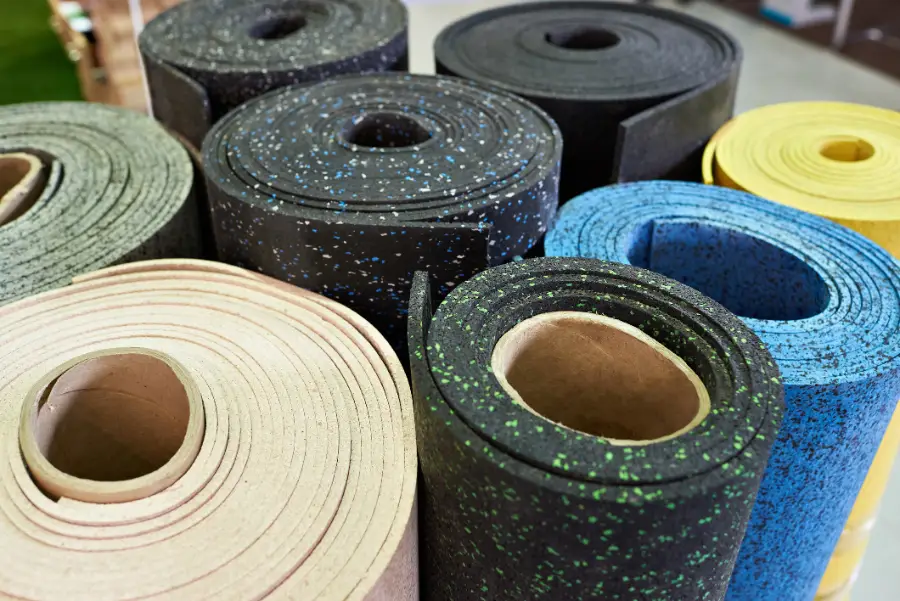
Poured-in-place rubber and rubber tiles both come in different thickness options. Poured systems allow more customization, while tiles are manufactured to specific depths.
Common Mistakes to Avoid
One mistake is choosing thickness based only on budget. Thinner materials may cost less upfront, but they may not meet safety standards. Replacing unsafe surfaces later usually costs more.
Another mistake is ignoring the sub-base. Even thick playground rubber flooring will not perform well if the ground underneath shifts or drains poorly.
Some planners also forget about future upgrades. If you plan to add taller equipment later, your current surface may not be thick enough.
How Thickness Affects Safety and Durability
Thickness does more than cushion falls. It also affects how long your surface lasts. Thicker rubber often handles heavy foot traffic better. This is helpful in schools, parks, and community centers.
Weather can also play a role. In areas with large temperature swings, thicker rubber may resist cracking and wear better over time.
Keep in mind that rubber density matters too. Two surfaces with the same thickness can perform differently if the material quality varies. Always check product testing ratings for impact protection.
When to Call a Professional
If you are unsure about fall height ratings or safety codes, it is smart to bring in an expert. A professional installer can:
- Review equipment specifications
- Confirm compliance with safety standards
- Recommend the correct depth for your layout
- Inspect the base for proper drainage and stability
This step is especially helpful for schools, churches, and public playgrounds where safety checks are strict. Getting it right the first time gives peace of mind.
Our Recommendation for Safe, Long-Lasting Results
If you are planning a playground project in Bay Shore, NY, we can help you choose the right thickness for your space. At FlexiTurf LTD, we review your equipment height, layout, and safety needs before recommending any playground rubber flooring solution. Our team focuses on safety, durability, and long-term value. Call us at (516) 260-6088 to talk about your project and get expert guidance tailored to your goals.